
The WSJ has an opinion piece today in which an economist claims, “A single-payer health-insurance system can finance good-quality coverage for all U.S. residents while still reducing overall health-care spending by roughly 10%, according to a study I co-authored last November. The WSJ article is behind a pay wall, but the study it cites is not (link provided).
Author: John Todd Roberts
Washington Examiner: Devin Nunes predicts criminal referral delivery next week
https://www.washingtonexaminer.com/news/devin-nunes-predicts-criminal-referral-delivery-next-week
Nunes’ referrals will be bombshells.
American Thinker: Trump FTC begins privacy and anti-trust investigations against tech giants
Not sure how I feel about this. I’m skeptical of regulatory interference, but I’m also skeptical of Silicon Valley’s ethical moorings.
American Thinker: How to Bypass the Online Censors
https://www.americanthinker.com/articles/2019/03/how_to_bypass_the_online_censors.html
Something similar developed in the USSR during the period of heavily controlled speech. Wikipedia: Samizdat was a form of dissident activity across the Eastern bloc in which individuals reproduced censored and underground publications by hand and passed the documents from reader to reader. This grassroots practice to evade official Soviet censorship was fraught with danger, as harsh punishments were meted out to people caught possessing or copying censored materials.
RealClear Politics: Trump Didn’t Call Neo-Nazis ‘Fine People.’ Here’s Proof.
Open Question
Now that “RussiaGate” is over (granting it may not be) what are the lessons to be learned?
Some areas to explore are media, politics, culture, law and the Constitution, but lessons learned need not be restricted to any one of these.
For myself, I have become more receptive to a political theory I never gave much thought to when I was young: the notion that secrecy, blackmail and conspiracy are main drivers of the engines of power. This notion has been a great awakening for me.
The open question, however is not quite so specific. What should we be thinking about now?
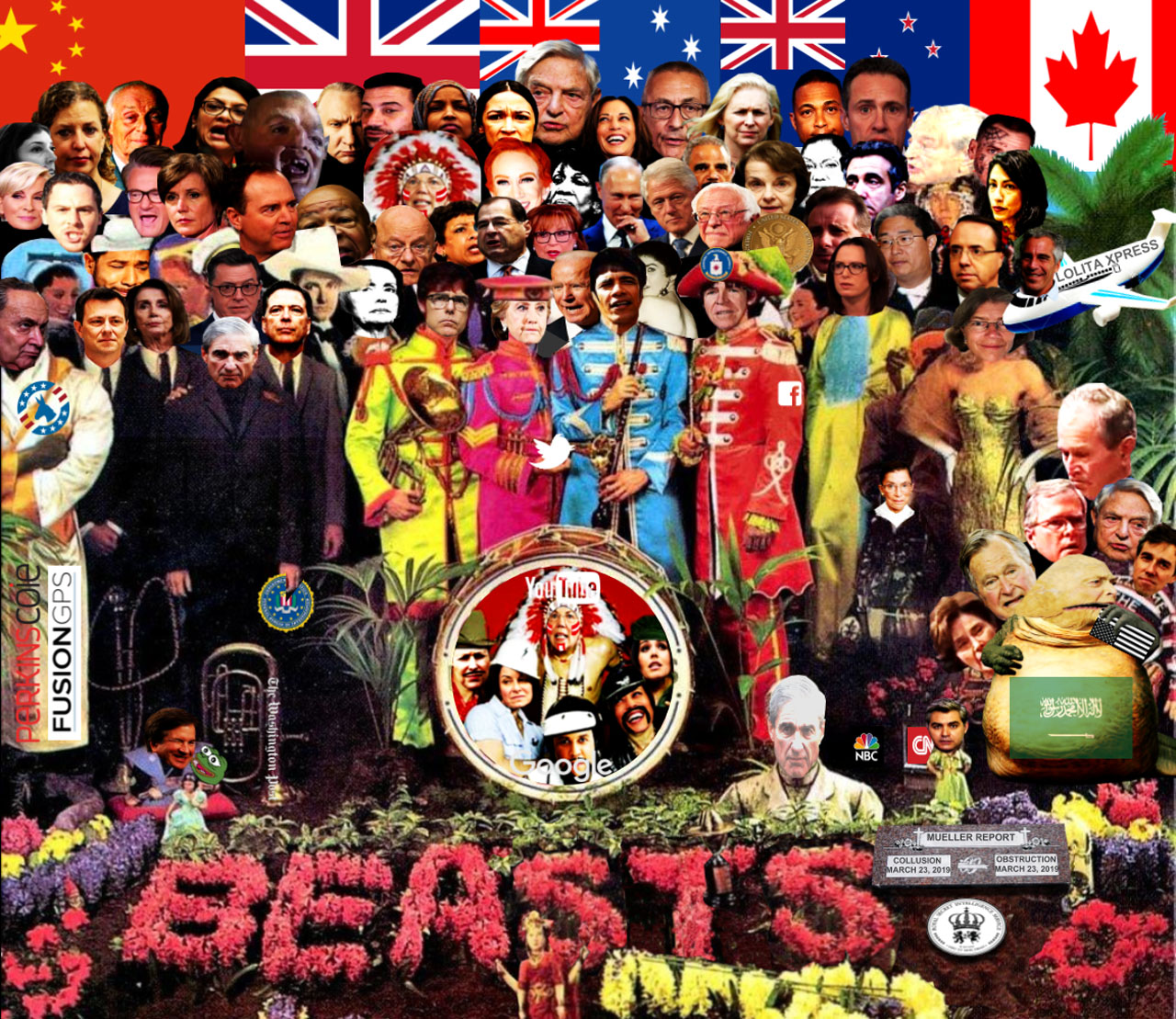
Sgt. Pepper’s or Mister Mustard?
White House: Proclamation on Recognizing the Golan Heights as Part of the State of Israel
I agree with this proclamation. The time is long past for pretending that a “two-state solution” in Isreal will ever work. Recognizing Israel’s sovereignty over the Golan Heights is a step in the right direction.
American Spectator: The Electoral College and Slavery: A Reality Check
https://spectator.org/the-electoral-college-and-slavery-a-reality-check/
“The notion that the Electoral College was designed to perpetuate slavery is nonsense.”

